
Challenges designers face in open source (and how to fix them)

Kola Ojoodide
on 26 June 2026
Tags: Design , open design , Open source
Open source software (OSS) is a cornerstone of modern technology. According to the Linux Foundation, it powers up to 90% of software tools used today. Unlike proprietary software, OSS is developed collaboratively, meaning its code is available for anyone to use, change, and distribute.
Because OSS projects have historically been driven by developers, they tend to be highly flexible and functional, but they can lack critical usability considerations. This often makes them difficult for everyday users to navigate and adopt. To bridge this gap, there is a need for more designers to contribute to open source and improve user experiences.
With this in mind, Canonical’s Design team conducted a survey exploring the real-world experiences of people contributing design work to open source projects. We received 115 responses from a diverse group: UX/UI designers, graphic designers, accessibility specialists, researchers, and design system experts, as well as open source maintainers who work with designers. We followed this up with qualitative interviews with 11 participants from around the world, ranging from OSS newcomers to veterans with over a decade of experience.
While our full research report will be published soon, we wanted to share some key insights. Here are four primary challenges that designers face in the open source ecosystem, and how communities can address them.
1. Finding OSS projects that accept design contributions is difficult
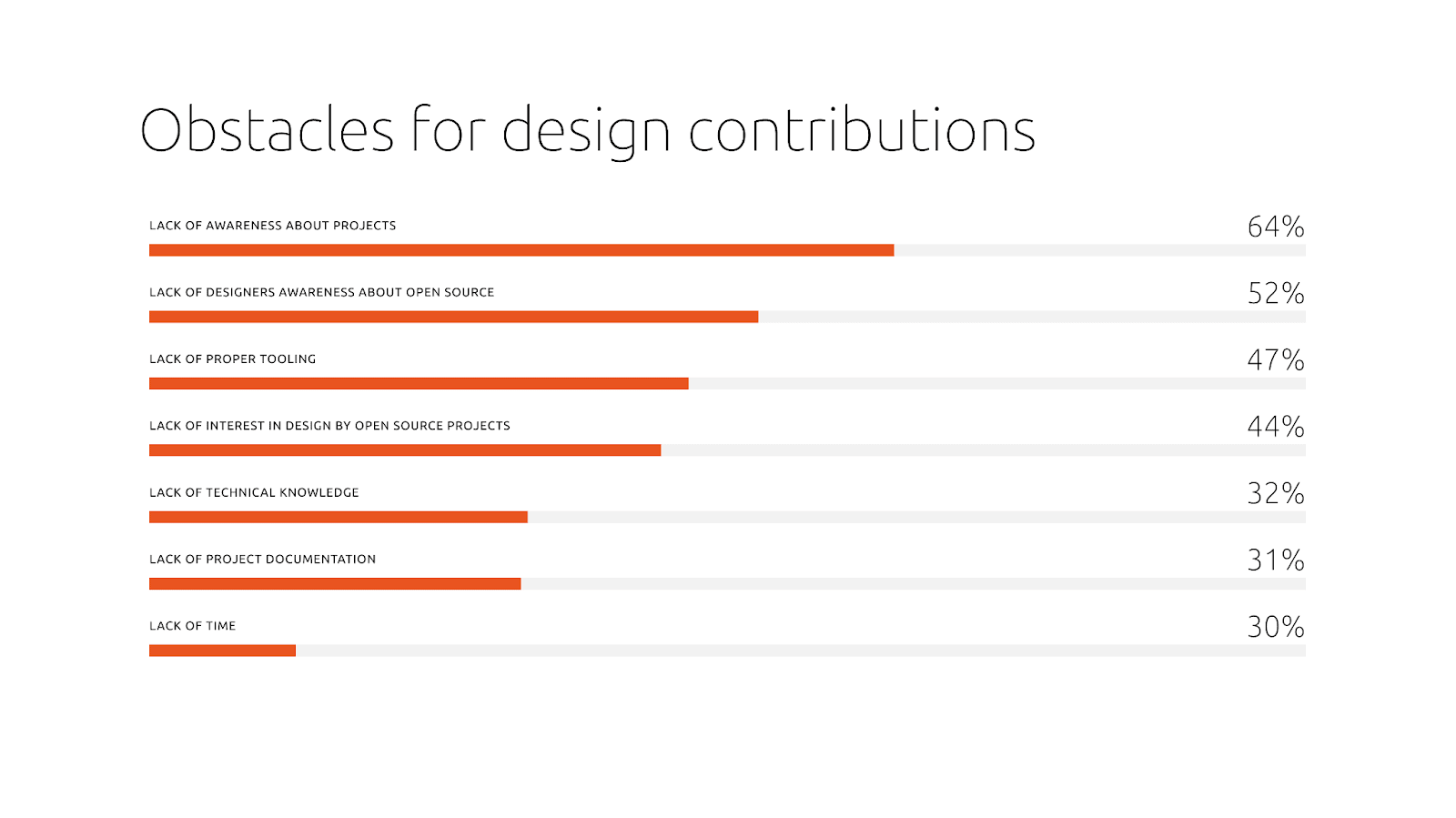
OSS design survey: What prevents you from contributing design to OSS projects?
The challenges receiving the most mention from our respondents were visibility and awareness. Many designers are unfamiliar with OSS so simply do not know where to look for projects. Even those who are familiar with open source still struggle to find projects that welcome non-code contributions.
A major factor contributing to this issue is confidence. While project maintainers are experienced in requesting code contributions, many admit they are less confident about requesting design work. Some are unsure how to structure the design contribution request or effectively engage with creative communities.
Initiatives like Open Source Design and Contribute.design are doing an excellent job of curating design-related contribution requests. However, there is still a lot that can be done to increase OSS awareness among designers, and to help maintainers use these platforms effectively.
2. Onboarding and documentation don’t support designers
Many OSS projects lack clear documentation for design contributions. While they often feature robust onboarding materials for developers, there is typically little to no guidance for designers.
This gap is partly due to a lack of design awareness among maintainers. 53% of those surveyed admitted they don’t understand how design fits into their project, leaving them struggling to document a design contribution workflow.
Without this infrastructure, designers lack critical project context. They may not know the target audience, scope of work, brand guidelines, or technical constraints. This makes starting a project stressful, and many give up before making their first meaningful contribution.
However, some communities are successfully tackling this issue. Projects like Bitcoin Design and Layer5 attract and retain non-code contributors by implementing proactive strategies like:
- Publishing dedicated “Get Started” guides for designers.
- Establishing structured mentorship systems for new contributors.
- Hosting regular AMA (Ask Me Anything) sessions and community syncs.
- Maintaining transparent design documentation logs.
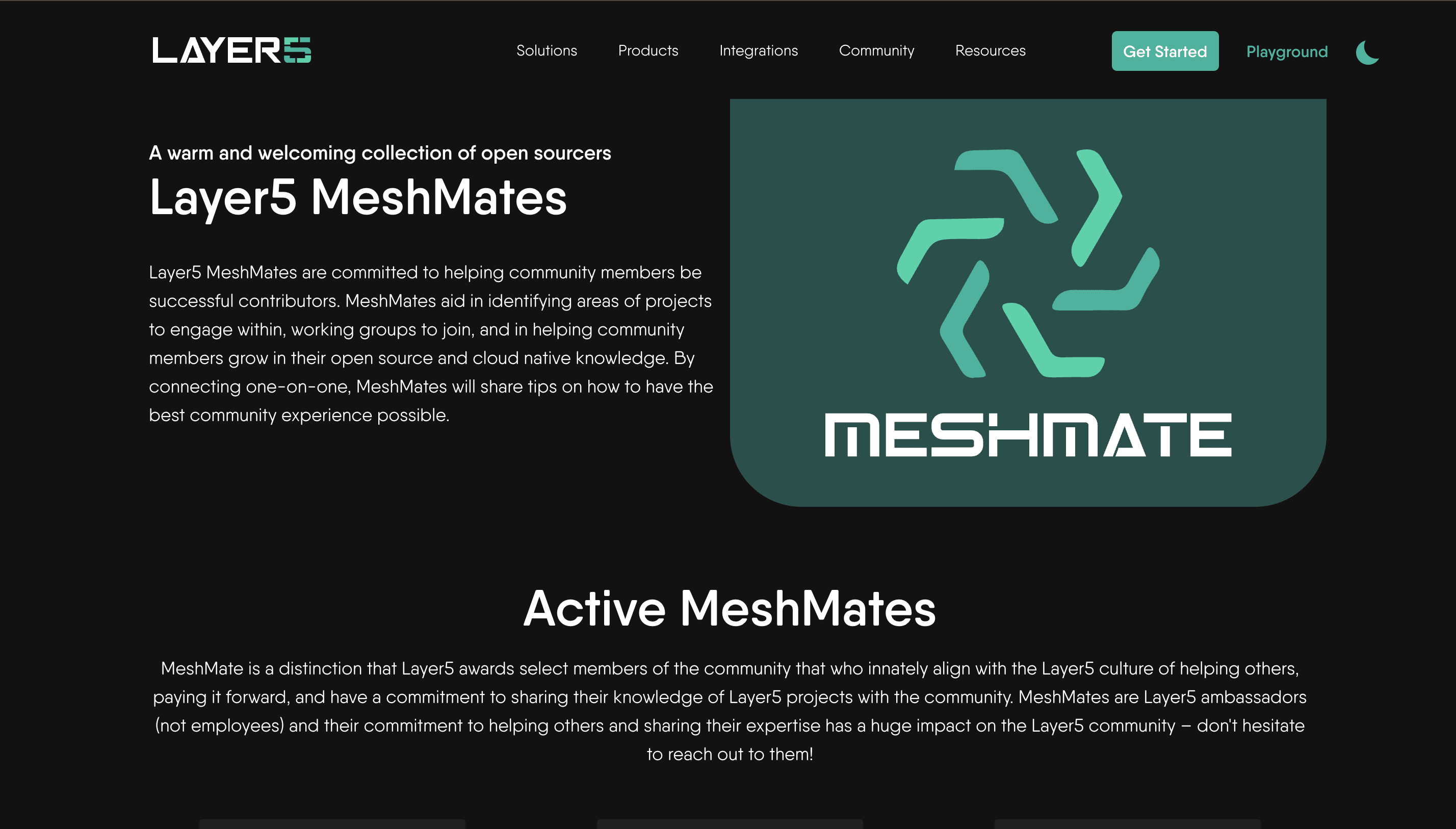
Layer 5’ mentorship program for new contributors
This lowers the barrier to entry and creates a genuinely welcoming environment. At Canonical, we have created a contribution brief template to give maintainers a clear framework for the information designers might need before they begin contributing.
3. Contribution platforms have steep learning curves
Open source collaboration primarily happens on Git-based platforms like GitHub, GitLab and Launchpad. While these tools are second nature to developers, they are rarely used by designers. New OSS designers frequently find it difficult to navigate issues, pull requests, repositories, and version control workflows.
The technical nature of these platforms acts as a significant barrier that might deter talented visual and UX contributors from getting involved.
This is another area where better onboarding materials make a massive difference. Beginner-friendly guides can demystify these platforms and simplify workflow setup. At Canonical, we have started addressing this hurdle by creating educational resources, like our recent “Getting Started with GitHub” video tutorial.
4. Designers face more pushback on non-visual contributions
One of the more surprising findings was that designers face significantly more friction when making non-visual contributions. Over the last decade, digital design has matured from just traditional “visual work” into research, product strategy, information architecture, specification writing, accessibility audits, and more.
However, designers reported getting a lot more pushback when trying to contribute in these non-visual areas. They frequently have to spend extra time justifying methods and defending fundamental UX decisions to maintainers.
OSS communities can address this by educating maintainers on the holistic role of design in software development. Additionally, maintainers can provide guidelines on how they review and accept non-code contributions. This transforms feedback into a more objective, structured, and transparent process.
The path forward
Overcoming these barriers requires a collaborative effort from both designers and OSS maintainers:
- Designers can bring immense value to OSS projects by improving accessibility and usability, but need to remain patient with an evolving ecosystem.
- Maintainers need to find clearer ways to signal openings for design, improve non-code onboarding, and formally recognize the value non-code contributors bring.
Fortunately, pioneering communities are already proving that design-friendly onboarding, structured documentation, and active mentorship works. By adopting these strategies, more OSS projects can attract and retain design talent, ultimately making open source software more inclusive, user-friendly, and widely adopted.
Keep an eye on our blog for the full research report, dropping in the coming weeks!
Join the Canonical design team
We’re looking for designers who care about craft and how systems work under the hood. At Canonical, design sits at the intersection of UX, engineering, and open source where we shape cohesive, accessible experiences across cloud, desktop, and IoT products.
If you enjoy solving complex problems and turning technical depth into clarity, explore our open roles: canonical.com/careers
Talk to us today
Interested in running Ubuntu in your organisation?